
Battery energy storage for councils, mine sites and remote communities
Smaller peaks. Less diesel. A clear answer in five business days.
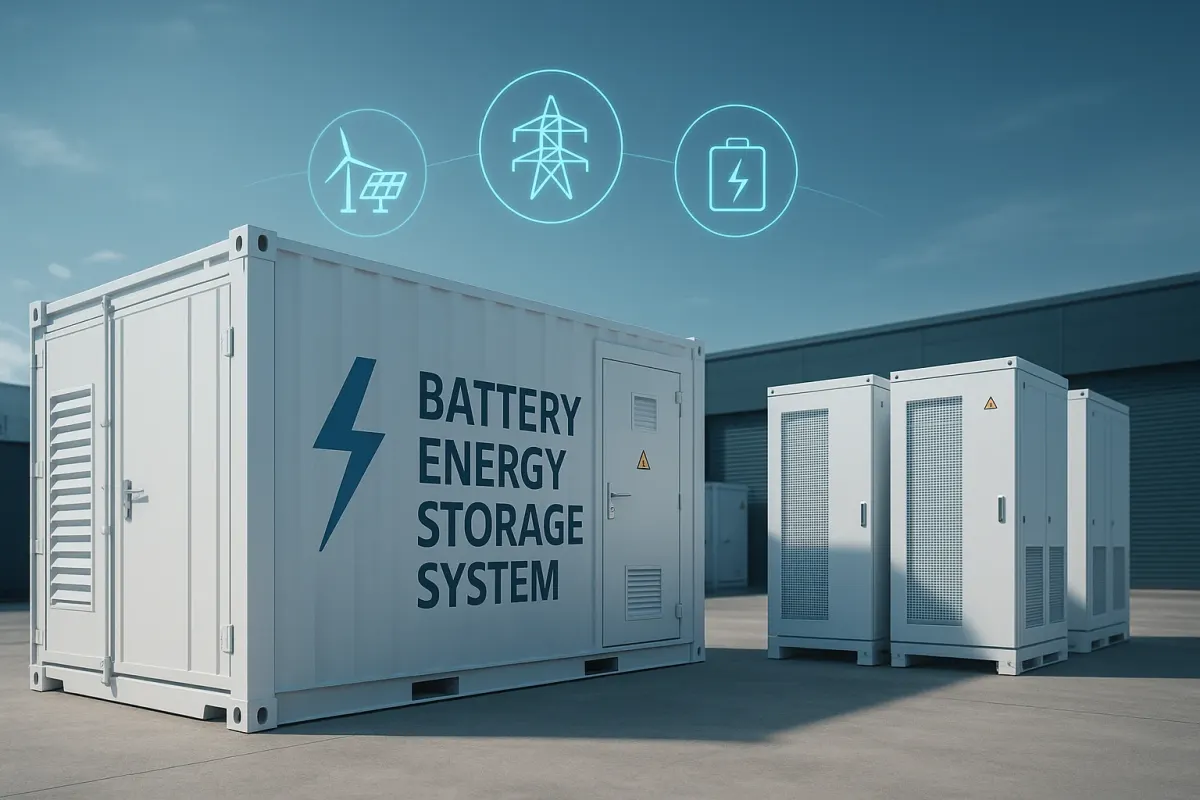
We size, supply, commission and support battery storage across Australia, from a single 233 kWh cabinet to multi-megawatt-hour systems. Send us the data you already have, and within five business days we'll tell you whether a battery stacks up at your site.
- Go/no-go in 5 business days
- Fixed-fee study you own
- Training included
Why Edisonic
We start with your numbers.
We tell you if it doesn't stack up.
You own the study.
We stay after commissioning.
Where batteries pay back
Councils
Mine sites
Remote communities
How it works
Send your data.
For a grid site, that's 12 months of interval data and two bills. For an off-grid site, it's 12 months of fuel records.
Get a go/no-go in five business days.
One page tells you whether a battery is worth a full study at your site, and why. It costs nothing.
Commission a fixed-fee feasibility study.
It covers load, tariff or fuel analysis, sizing, payback, incentives and the connection pathway. The study is yours to keep.
We deliver and stay.
Supply, commissioning, operator training, monitoring and lifecycle support.
Systems we deliver
| System | Power and energy | Best fit |
|---|---|---|
| C&I all-in-one cabinet | 100 kW / 233 kWh or 125 kW / 261 kWh | Council sites, depots, pools, community facilities, stations, small mine sites |
| Distributed system | 2.5 MW / 5 MWh | Processing plants, larger waste and water sites, mine power stations |
| Centralised system | 5 MW / 10 MWh | Large mine sites, towns, utility-scale storage |
Site savings estimator
Want a rough number first? The site savings estimator has presets for councils, mine sites and remote communities.
Frequently asked questions
What is a battery energy storage system (BESS)?
A BESS stores electricity and releases it when it's worth more: at peak demand, overnight after a solar day, or when a generator would otherwise have to run. Ours use lithium iron phosphate (LFP) cells, liquid cooling and an energy management system with remote monitoring.
What size of site suits a battery?
Our smallest system is a 233 kWh cabinet. It suits sites whose demand peaks well above 100 kW, sites with a large solar system, and sites that run generators for much of the day.
How much does a battery cost?
That depends on size, site works and the network connection. We price systems landed, installed and commissioned once the study confirms the size. The go/no-go costs nothing.
Are there incentives for commercial batteries?
In NSW, the Peak Demand Reduction Scheme has included business batteries above 200 kWh (activity BESS5) since September 2026, and the NSW Government says the discounts cut the upfront cost of batteries by around 20 to 40 per cent. Federal and state programs also fund some council and remote community projects. We check eligibility for your site and system in the study.
Where do you work?
Across Australia, from offices in Sydney and Brisbane.
Find out if a battery stacks up at your site. One page, five business days, no cost.